


|

| First of its kind in the world |
| February 3, 2010 |
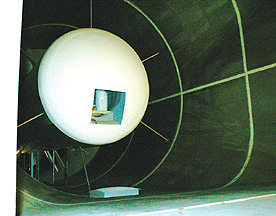 |
The wind tunnel inside the university’s new Automotive Research Centre will be able to accommodate a number of large vehicles which will allow students and researchers the opportunity to test new innovations, all under one roof. It will be capable of creating wind speeds that exceed 240km/h. By Katie Strachan In an instant the temperature inside the soon-to-be wind tunnel at Oshawa’s university can change from minus 40 degrees Celsius to 60 degrees Celsius. “When completed later this year, industry leaders, researchers and students will collaborate to create, test, and validate some of the most innovative products in the world, including the next generation of clean and green vehicles and energy systems,” he says.
|

 |
| “It is large enough to accommodate cars, trucks and buses, but it also has the capacity to accommodate locomotives, aircraft components and alternative energy technology such as wind turbines, says the dean. |
||


©2008 Dowellman Publishing Corp, All Rights Reserved
